In this guide
The storefront signs that get noticed are the ones sized for the street, lit for evening traffic and placed where people actually look. For most shops that means a primary building sign, such as channel letters or a lighted cabinet, plus a second sign aimed at people walking or driving close by. Below are 12 storefront sign ideas, when each one fits, and the readability, material and permit questions to settle before you order.
Cost figures are third-party national estimates, not Suntronix pricing. Code examples are one city’s rules.
Which storefront sign types should you consider?
Start with how customers approach. A shop on a busy arterial needs a sign drivers can read at speed; a main-street shop needs something pedestrians see before they pass the door.
| Sign type | Best for | Published national range |
|---|---|---|
| Front-lit channel letters | Main identity on a building wall | $4,000 to $20,000, installed |
| Halo-lit channel letters | A quieter, upscale look | Up to 30% more than standard letters |
| Lighted cabinet sign | Budget-friendly lighted identity | $500 to $5,000 (outdoor lighted signs) |
| Awning sign | Main streets, cafes, shade over the door | $500 to $5,000, including installation |
| Vinyl window lettering | Hours, phone, services | $10 to $100 |
| Outdoor LED message center | Changing offers and events | $750 to $30,000 |
| Monument sign | Stores set back from the road | $5,000 to $20,000 |
12 storefront sign ideas that get noticed
1. Front-lit channel letters
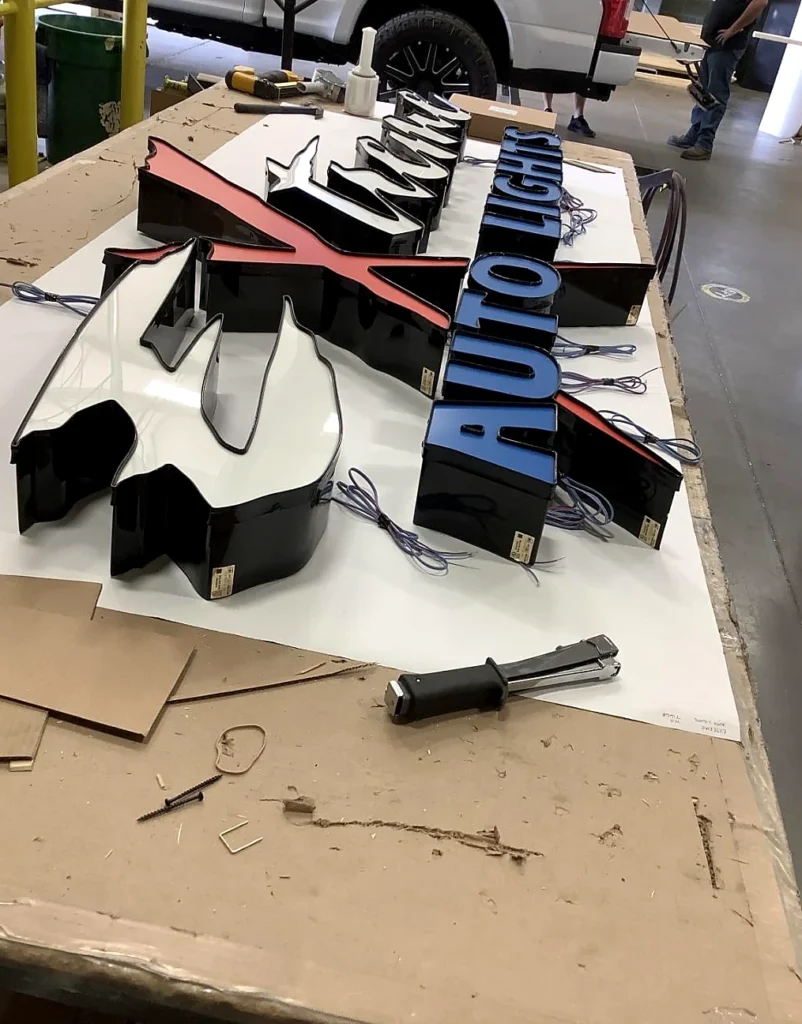
Individual letters with lit faces are a common storefront choice because they read clearly day and night and can follow your logo. HomeAdvisor puts channel letters at $4,000 to $20,000, including installation. Wall sign allowances can be tied to building frontage. In Spokane, Washington, as one city’s example, wall signs get 1.5 square feet per foot of primary building wall or 15 percent of that wall, whichever is greater. See the channel letters page and the channel letter planning checklist.
2. Halo-lit (reverse) channel letters
Halo-lit letters light the wall behind them instead of the letter face, which gives a softer glow that suits salons, professional offices and boutiques. HomeAdvisor says reverse channel letters can cost up to 30 percent more than standard channel letters.
3. Non-illuminated dimensional letters
Unlit cut or fabricated letters give depth with less complexity than lit letters. They suit shops that close before dark or walls already washed by other lighting.
4. Lighted cabinet sign
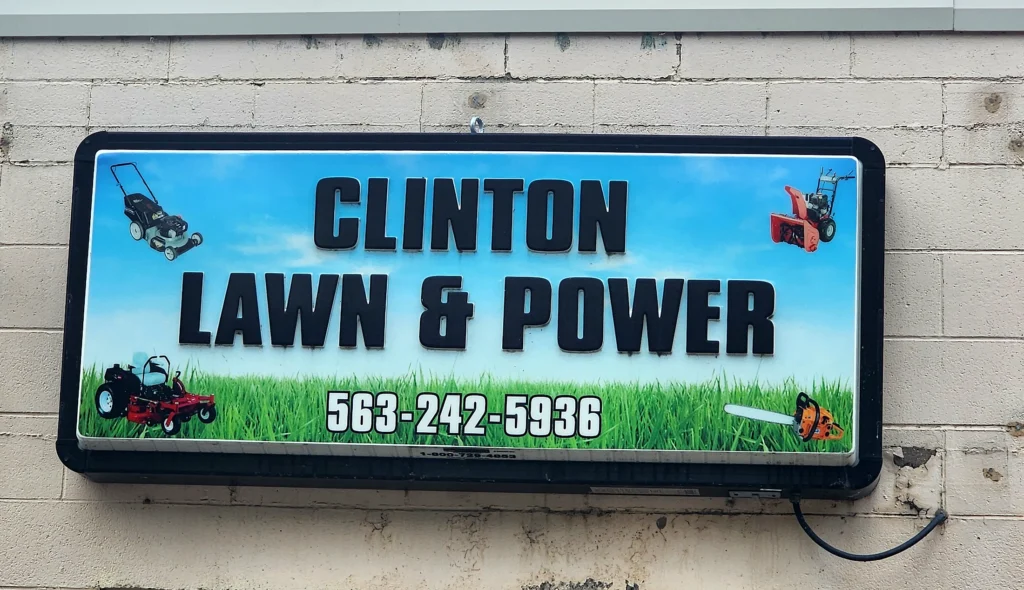
A cabinet, or box, sign puts your graphics on a lit face inside a single enclosure. HomeAdvisor’s range for outdoor lighted signs is $500 to $5,000. Polycarbonate faces such as Lexan resist impact; GE’s product data sheet describes the sheet as providing “excellent protection against vandalism.” Suntronix offers a limited warranty on qualifying Lexan lighted sign faces; vandalism is excluded, and coverage is confirmed in the proposal. See the cabinet signs page and the lighted signs page.
5. Blade or projecting sign
A blade sign sticks out from the wall so people walking or driving along the street see it head-on. USSC research found that perpendicular signs were almost never missed, while test drivers drove past 30 percent of the parallel signs. The USSC model sign code defines a projecting sign as one that projects more than 18 inches from a building, and it limits projection over a public sidewalk to two-thirds of the sidewalk width. San Diego, as one city’s example, allows one projecting sign for each premises with street frontage.
6. Awning sign
Graphics on an awning identify the shop and shade the entrance. HomeAdvisor puts awning signs at $500 to $5,000, including the awning and installation. Under the USSC model code, only the copy area counts as sign area, and striping or patterns on the awning are not counted. Where an awning extends over driveways or parking, the model code requires at least 14 feet of clearance underneath.
7. Window graphics and vinyl lettering
Window lettering carries hours, phone number and key services. HomeAdvisor’s national range for a vinyl lettering setup is $10 to $100. Rules vary. San Diego, as one city’s example, does not require a separate sign permit for window signs. Ask whether your city counts window graphics toward total sign area.
8. LED window display
An indoor digital display facing the glass can show specials and products to people on the sidewalk. Because viewers stand close, pixel pitch matters: AVIXA, the audiovisual industry association, notes that the finer the pitch, the closer the acceptable viewing distance, and that cost rises as pitch gets finer. Check your code: Spokane’s sign code, as one city’s example, says illuminated signs placed in windows are subject to its sign regulations.
9. Outdoor LED message center
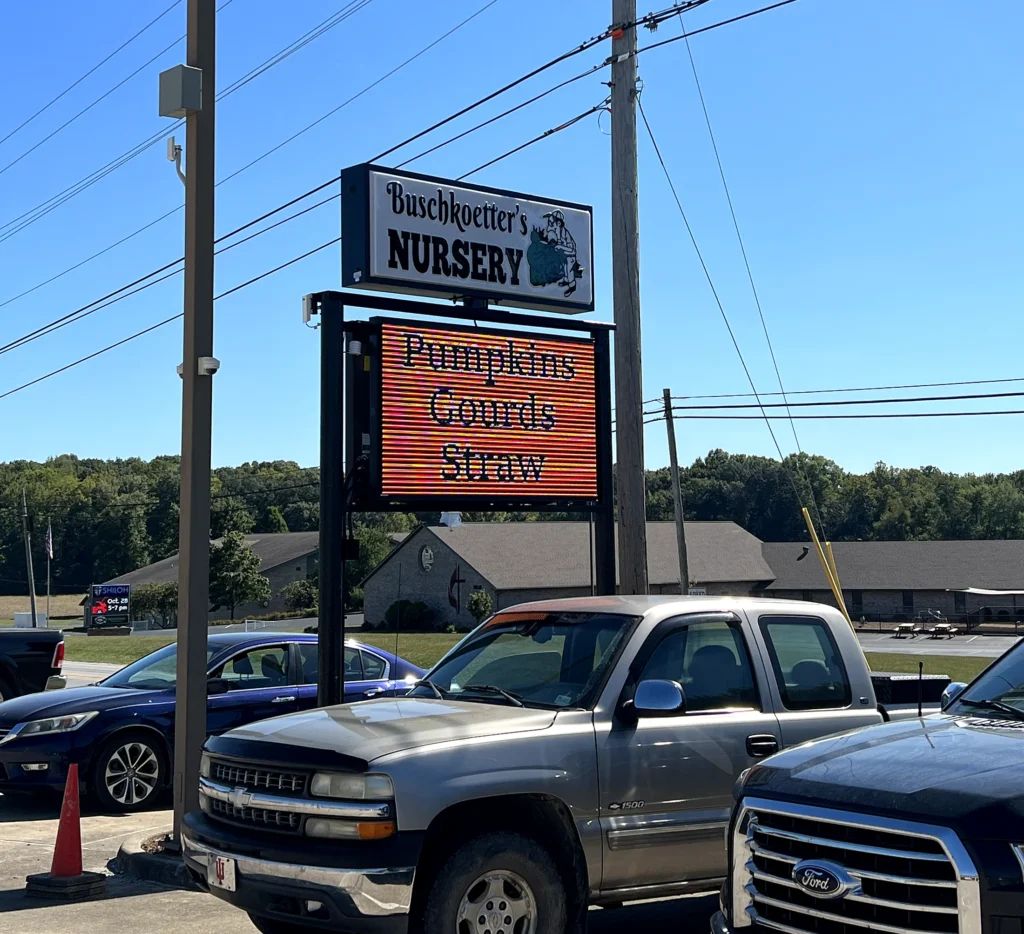
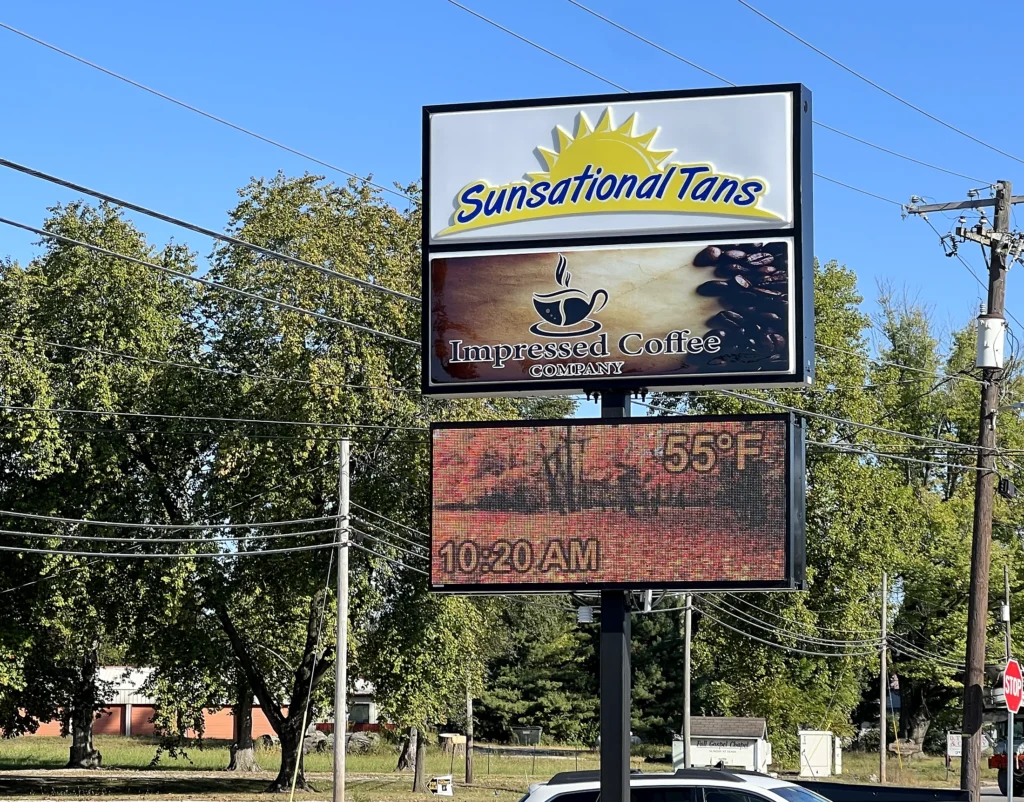
A full-color LED message center lets you change offers by the hour. HomeAdvisor’s range for outdoor LED and digital signs is $750 to $30,000. It also warns that many towns limit or ban digital signs and flashing marquees. Spokane, for example, prohibits message centers in all downtown zones. Every Suntronix digital sign order includes on-site training for the software, communication setup and scheduling. See the digital LED signs page.
10. Monument sign for a set-back store
When parked cars or landscaping hide the building, a sign near the driveway does the work. HomeAdvisor puts monument signs at $5,000 to $20,000. USSC guideline standards warn that copy at or below five feet above grade can be blocked by other vehicles, and recommend sign copy no less than seven feet above grade, though local height limits may say otherwise. See the monument signs page.
11. Tenant panel on a shared plaza sign
In a strip center, your panel on the shared pylon or monument may be the only sign drivers see. Keep it to your name and one descriptor, and get the landlord’s sign criteria first. See the retail plaza signs page and the pylon signs page.
12. Marquee or reader board
A changeable letter section suits shops that post a weekly special without a digital display. See the marquee and reader board signs page, and the restaurant signs page for food-service ideas.
How big should storefront sign letters be?
Size letters for the farthest place a customer needs to read them. The USSC’s rule-of-thumb legibility index of 30 means one inch of capital letter height for every 30 feet of viewing distance. All-caps copy needs letters about 15 percent taller, and the USSC recommends keeping at least 60 percent of the sign as empty space.
| Viewing distance | Typical situation | Capital letter height |
|---|---|---|
| 60 feet | Across a two-lane street, on foot | About 2 inches |
| 150 feet | Across a parking lot | About 5 inches |
| 300 feet | Driver approaching on a slower street | About 10 inches |
| 600 feet | Driver on a faster multi-lane road | About 20 inches |
The viewing distance guide shows how to work out distance from road speed.
Which materials hold up on a storefront?
Match materials to exposure. GE’s data sheet for Lexan SG305 sign sheet describes it as combining high impact resistance with optical clarity, which matters for faces at sidewalk height. HomeAdvisor notes that plastic and aluminum signs cost less than steel signs.
Electrical planning belongs in the design stage. EC&M’s summary of National Electrical Code Article 600 says each tenant entrance in a commercial building accessible to pedestrians needs a sign outlet, that electric signs must be listed, and that the disconnect must be within sight of the sign.
Do storefront signs need a permit?
Usually. HomeGuide notes that installing a business sign typically requires one or more permits, depending on local building codes and whether the sign is indoors or outdoors. HomeAdvisor suggests budgeting $400 to $2,500 for permits. Replacement counts too in some places: Panguitch, Utah, as one city’s example, requires a permit for the alteration or replacement of any sign. If you lease, get the landlord’s written approval and sign criteria first. Suntronix provides the drawings and specifications a permit application needs, and can coordinate permitting and installation for a fee.
A Suntronix representative can review your site and recommend a combination. Send photos and your address for a quote; the form accepts JPG, PNG or PDF files up to 5 MB.
Frequently asked questions
What is a good primary storefront sign?
Channel letters are a common choice because they read clearly at night and can follow a logo. HomeAdvisor puts them at $4,000 to $20,000 installed, a third-party national estimate. Lighted cabinet signs are a lower-cost alternative, and a blade or window sign can serve people walking by.
What are some cheap business sign ideas?
Vinyl window lettering is the lowest-cost option in HomeAdvisor’s national ranges, at $10 to $100. A new face in a sound existing cabinet is another real saving. Spend where it counts: keep the business name large enough to read from the street rather than shrinking it to fit more copy.
Do I need a permit to put letters on my storefront window?
It depends on the city. San Diego, as one city’s example, exempts window signs from its separate sign permit, while other codes regulate lit window signs, as Spokane does. Call your planning office with the address and a sketch before you order.
Can I put an LED sign on my storefront?
Often, but check first. HomeAdvisor notes many towns limit or ban digital signs, and some, like Spokane’s downtown zones, prohibit message centers outright. Where they are allowed, expect rules on hold time and night brightness.
Sources
Sources accessed October 13, 2026. Cost ranges are third-party national estimates, not Suntronix pricing. Municipal code figures are one city’s example. Letter heights are our calculation from the USSC legibility index.
- HomeAdvisor, “How Much Does Commercial Sign Installation Cost?” (updated June 20, 2026)
- HomeGuide, “How Much Does a Business Sign Cost?” (Dec. 19, 2023)
- United States Sign Council, “Sign Legibility Rules of Thumb” (2006)
- USSC Foundation, “On-Premise Signs Guideline Standards” (2018)
- USSC Foundation, “Model On-Premise Sign Code” (a model, not law)
- City of Spokane, Washington, Municipal Code 17C.240.230
- City of Spokane, Washington, Municipal Code 17C.240.220
- City of Spokane, Washington, Municipal Code 17C.240.247
- City of San Diego, Information Bulletin 111, “How to Obtain a Permit for Signs” (May 2026)
- Panguitch City, Utah, Signage Permit
- AVIXA Xchange, “What is Pixel Pitch? How to Calculate Pixel Pitch”
- GE Structured Products, Lexan SG305 Sheet for Signs, product data sheet
- EC&M, “NEC Rules for Electric Signs and Outline Lighting”