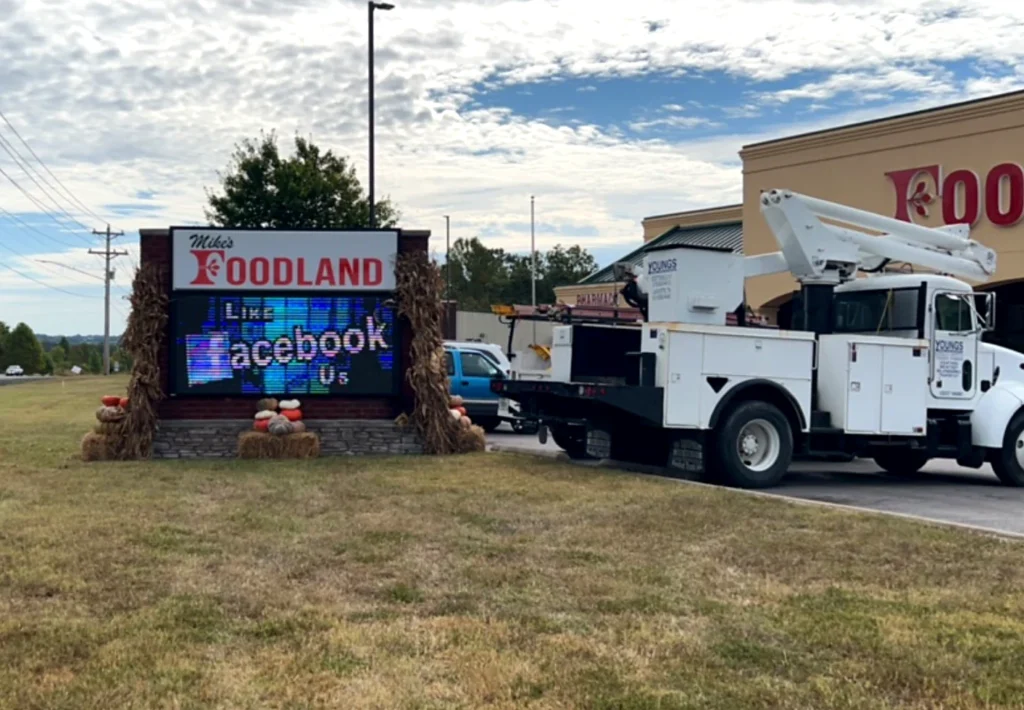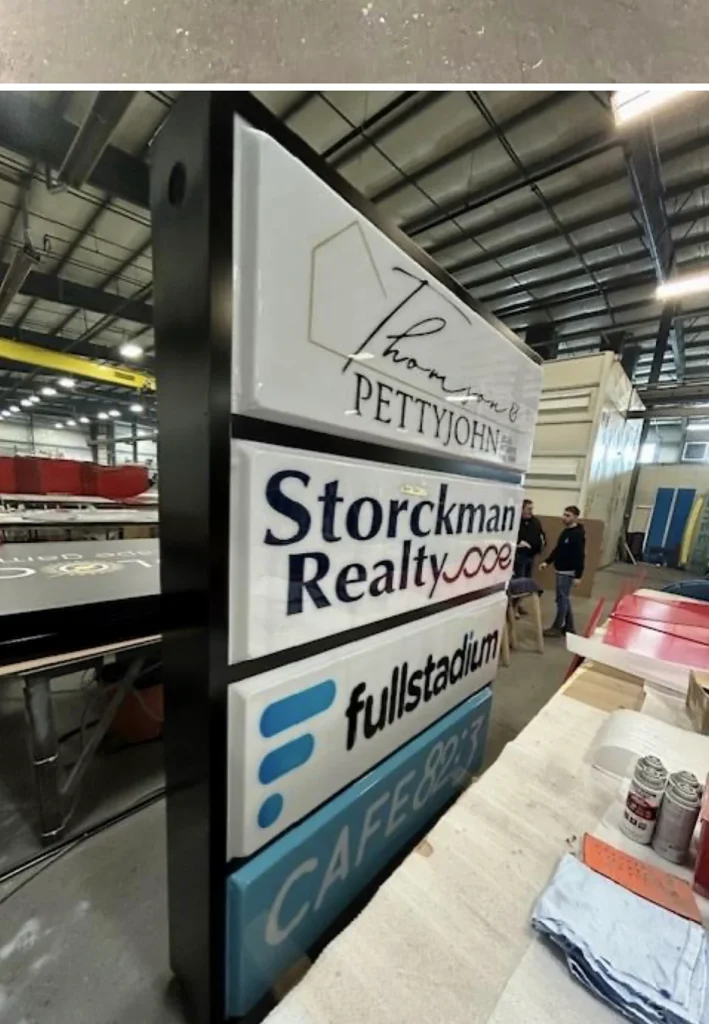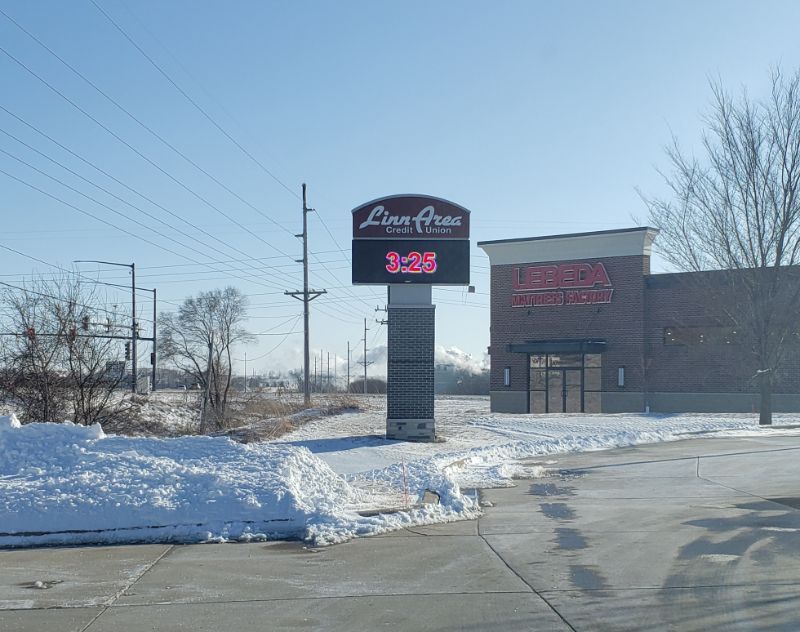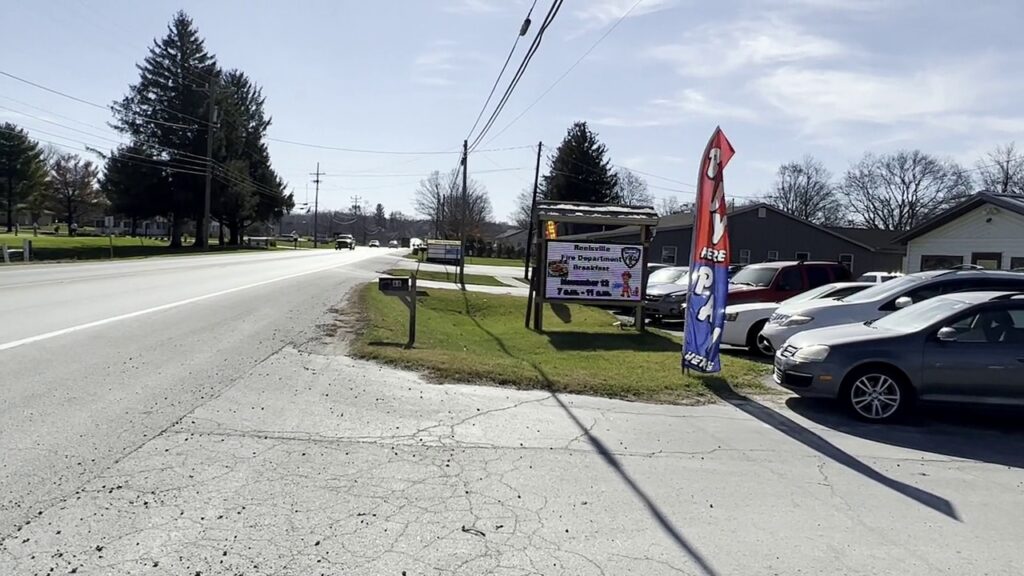
What is a monument sign, and how is it different from a pylon, pole or cabinet sign?
A monument sign sits on a continuous base with no open space underneath. A pylon raises the sign on covered supports, a pole sign on exposed poles, and a cabinet is the lighted box itself, which can mount on any of them. The right format depends on road speed, setback and the local height limit.
It is tempting to compare these formats on looks. Compare them on the road instead. A monument reads well to drivers who are already slowing for your entrance. A pylon earns its height when drivers need to spot you from far back on a faster road.
The cost ranges below are third-party national estimates, not Suntronix pricing. They vary with size, lighting, foundations and local labor, and the two guides group sign types differently.
| Format | How it stands | Where it tends to fit | Watch for | Published installed cost range |
|---|---|---|---|---|
| Monument | Solid base from the ground up | Entrances, office parks, slower roads, height-capped zones | Low copy can be blocked by traffic and snow | $5,000 to $20,000+ (HomeGuide); $5,000 to $20,000 (HomeAdvisor) |
| Pylon | Sign faces on supports wrapped in a cover | Faster roads, deep setbacks, multi-tenant centers | Engineering, foundation and height limits | $10,000 to $100,000+ (HomeGuide); $20,000 to $100,000 for pylon and pole (HomeAdvisor) |
| Pole | Cabinet on exposed steel poles | Roadside sites that need height on a tighter budget | Clearance over drives and parking | Grouped with pylons: $20,000 to $100,000 (HomeAdvisor) |
| Cabinet | The lighted box and face; mounts on a wall, pole or base | Wall signs and replacement faces on existing structures | Face material and lighting quality | $500 to $5,000 for outdoor lighted signs (HomeAdvisor) |
Sources: HomeGuide - How Much Does a Business Sign Cost? (Dec. 19, 2023); HomeAdvisor - How Much Does Commercial Sign Installation Cost? (updated June 20, 2026)
How tall should a monument sign be?
Tall enough that the copy clears parked cars and passing traffic. The United States Sign Council found copy at five feet or lower can be blocked by other vehicles, and it recommends copy at least seven feet above grade. Local codes often cap monuments lower, so the base and layout have to work within that cap.
This is a real conflict in monument design. USSC research notes that a seven-foot copy height can run counter to community codes that set low height limits for monument signs.
Heights vary widely by place. In Spokane, Washington, for example, some commercial zones allow only one monument sign per arterial frontage with a 5-foot maximum height, while general commercial zones allow freestanding signs up to 35 feet. Clemson, South Carolina limits signs serving several businesses on one parcel to eight feet above the adjacent sidewalk grade. Those are single-city examples. Your city's code is the one that counts.
How height is measured also matters. The USSC model code measures from the ground directly below the sign to its top. If your lot sits below the road, a sign that meets the limit on paper can end up low in the driver's view. Ask the zoning office how they measure before you finalize the design.
Sources: USSC Foundation - On-Premise Signs Guideline Standards (2018); City of Spokane, WA - Municipal Code 17C.240.230, Standards in the Commercial and Industrial Zones (one city's example); City of Clemson, SC - Code of Ordinances, sign standards (online page 505; one city's example); USSC Foundation - Model On-Premise Sign Code (a model, not law)
How big should the letters on a monument sign be?
Size the letters for the distance a driver covers while noticing, reading and turning. Using USSC rules of thumb, a 30 mph two-lane road calls for capital letters of about 12 inches, and a 45 mph four-lane road about 22 inches. All-caps text needs roughly 15 percent more height.
The USSC method has two steps. First, estimate viewer reaction time: about 8 seconds under 35 mph on simple roads, 10 seconds on busier four-to-five-lane roads over 35 mph, and 11 to 12 seconds on high-speed multi-lane roads. Multiply that time by speed in feet per second (mph times 1.47) to get the reading distance.
Second, divide that distance by a legibility index. USSC uses 30 as a common average, meaning one inch of capital letter height for every 30 feet of distance. It is an average, not a guarantee for every font, color or lighting condition.
Space matters as much as letters. USSC recommends that open background take up at least 60 percent of a sign panel. On a monument, that usually means the business name gets the face and secondary copy moves to the building or a smaller panel.
| Road and speed | USSC reaction time | Distance covered in that time | Capital letter height |
|---|---|---|---|
| 25 mph, two to three lanes | 8 seconds | About 294 ft | About 10 in |
| 30 mph, two to three lanes | 8 seconds | About 353 ft | About 12 in |
| 45 mph, four to five lanes | 10 seconds | About 662 ft | About 22 in |
| 55 mph, multi-lane | 11 to 12 seconds | About 889 to 970 ft | About 30 to 32 in |
Sources: United States Sign Council - Sign Legibility Rules of Thumb (2006)
What should the base and faces be made of?
Match the base to the building and the face to how the sign is lit. Masonry, stone or a finished aluminum cabinet are common bases. Lighted faces are often polycarbonate, which sign-sheet makers sell for impact resistance. Unlit monuments can use dimensional letters with ground lighting.
Lighting choices change the build. An internally lit cabinet uses a translucent face with LED modules inside. Routed aluminum faces let only the letters glow. Dimensional letters on a masonry base can be halo-lit or lit from the ground. Each approach needs power at the sign, so plan the conduit route early.
GE's data sheet for Lexan SG305 sign sheet describes it as combining impact resistance with optical clarity for protection against vandalism. Suntronix offers a limited warranty on qualifying Lexan lighted sign faces; vandalism is excluded, and coverage is confirmed in the proposal.
Inspect the site for the things that age a monument: sprinkler overspray on the face, plantings that will grow into the copy, snow plowed against the base, and grade that sends water toward the footing.
Sources: GE Structured Products - Lexan SG305 Sheet for Signs, product data sheet
Can you add an LED message center to a monument sign?
Yes, where the zone allows one and the base can carry it. Check two things first: whether your zone allows an electronic message center and how much of the sign it may occupy, and whether drivers view the sign from close enough to justify a finer pixel pitch.
Rules on message centers vary by zone. Spokane, for example, limits a message center to half of the allowed sign area in several commercial zones and prohibits them downtown. Many codes also set a minimum time each message must stay on screen and a night brightness cap, often 0.3 footcandles above ambient light, the level the International Sign Association recommends.
Monuments are seen from shorter distances than pylons, so pitch can be finer. AVIXA, the audiovisual industry association, notes that the finer the pitch, the closer the acceptable viewing distance, and that pixel density and cost rise as pitch shrinks. Choose pitch for your closest regular viewers.
Suntronix builds full-color LED message centers into monument, pylon and cabinet signs, and every digital sign order includes on-site software training. The digital sign guide covers pitch, brightness and local rules in more depth.
Sources: City of Spokane, WA - Municipal Code 17C.240.247, Electronic Message Center Signs (one city's example); International Sign Association - EMC Brightness Level Recommendations; AVIXA (Audiovisual and Integrated Experience Association) Xchange - What is Pixel Pitch? How to Calculate Pixel Pitch
What permits, engineering and foundation work does a monument sign need?
Expect a sign permit, and often a building and electrical permit as well. Many codes require stamped structural drawings for monuments and pylons. The footing is designed for local wind loads, and a lighted sign must be a listed product with a disconnect within sight of it.
HomeGuide notes that codes commonly require stamped structural engineering drawings for monuments and pylons, with engineers charging $500 to $3,000 for plans. Under the International Building Code, wind loads are set using ASCE 7, so the same sign may need a different footing in a different county.
On the electrical side, the National Electrical Code requires electric signs to be listed and installed per their listing, and it requires a disconnecting means within sight of the sign. Running power underground averages $10 to $25 per foot installed, according to HomeGuide, so the distance from your panel matters.
Placement rules add their own limits. Spokane requires monument signs taller than three and a half feet in residential front setbacks to sit ten feet back, and it keeps a clear view zone between three and ten feet above grade inside its defined clear view triangles. A monument by a driveway or corner can block the very sight line drivers need to leave safely.
Suntronix can coordinate permitting and installation for a fee, or provide drawings and project information to your permit contact and installer.
Sources: HomeGuide - How Much Does a Business Sign Cost? (Dec. 19, 2023); International Code Council - Demystifying Loads: 2024 IBC and ASCE 7-22 (IBC Section 1609.1.1); EC&M - NEC Rules for Electric Signs and Outline Lighting (NEC Article 600); City of Spokane, WA - Municipal Code 17C.240.243, Freestanding Signs (one city's example); City of Spokane, WA - Municipal Code 17C.240.240, Sign Placement and Location Restrictions (one city's example)
What drives the cost of a monument sign?
Size, base material, lighting, any LED display, the foundation and the distance to power drive most of the price. National guides put the sign itself around $5,000 to $20,000 installed. Permits, engineering and electrical runs can add several thousand dollars on top.
The ranges below come from national consumer cost guides. They are not Suntronix prices, and your site can land above or below them.
- Face size and the number of sides that carry copy.
- Base construction: masonry and stone take more labor than a finished aluminum base.
- Illumination type, and whether the sign includes a full-color LED message center.
- Footing size, which depends on sign size, soil and local wind loads.
- Trenching and wiring from the nearest electrical panel.
- Removal of an old sign and its foundation.
| Item | Published range | Source |
|---|---|---|
| Monument sign, installed | $5,000 to $20,000+ | HomeGuide |
| Monument sign | $5,000 to $20,000 | HomeAdvisor |
| Building permit | $400 to $2,500 | HomeAdvisor |
| Structural engineering plans | $500 to $3,000 | HomeGuide |
| Electrical wiring | $560 to $2,300 | HomeAdvisor |
| Underground power run | $10 to $25 per foot | HomeGuide |
Sources: HomeGuide - How Much Does a Business Sign Cost? (Dec. 19, 2023); HomeAdvisor - How Much Does Commercial Sign Installation Cost? (updated June 20, 2026)
How long does a monument sign project take?
The sequence is predictable even when the calendar is not: site survey, design and pricing, property approval, permit and engineering, fabrication, footing, installation and wiring. Permit review time is set by your city, so ask the permit office for its current turnaround before you commit to an opening date.
- Site survey: road speed, setback, sight lines, utilities and power source.
- Design and pricing, ideally reviewed on site.
- Landlord, association or property-owner approval where required.
- Permit application with drawings, and engineering if the code requires it.
- Fabrication of the cabinet, faces and any LED display.
- Utility locates, footing and base work.
- Installation, electrical connection and, for digital signs, on-site software training.
What should you prepare before asking for a quote?
Bring the address, photos from both directions of travel and from the entrance, the posted speed limit, rough distances to the road and property line, your logo files, and any sign criteria from a landlord or association. Note whether an old sign, footing or power already exists.
Suntronix works with customers at their location, reviewing the site before shaping a concept and quote. Financing may be available for qualifying projects.
- Photos from both travel directions, taken safely as a passenger or pedestrian.
- Posted speed limit and number of lanes.
- Approximate distance from the curb and the property line to the proposed spot.
- Existing sign, footing, conduit or electrical service at that spot.
- Logo or artwork files. The Suntronix quote form accepts JPG, PNG or PDF files up to 5 MB.
- Tenant names, if the monument will list more than one business.
- Whether you want a message center, and who will run it.