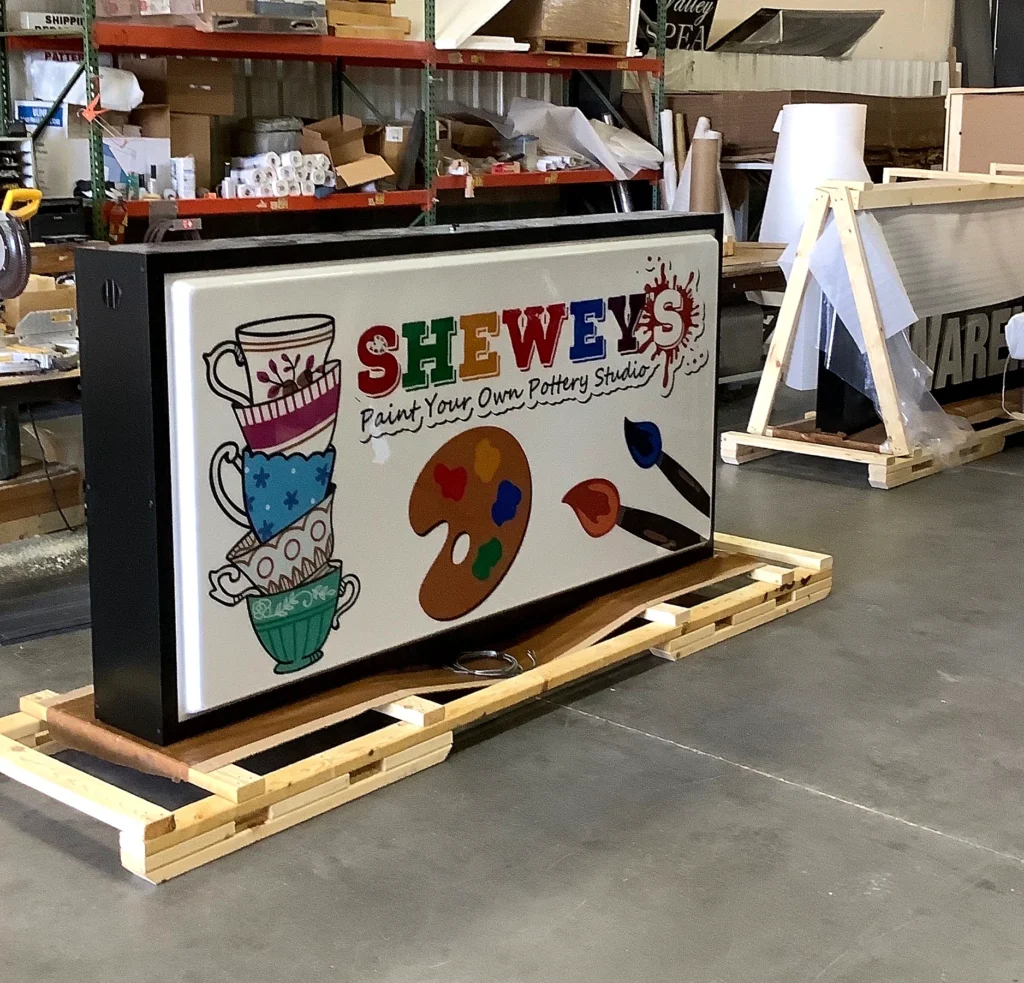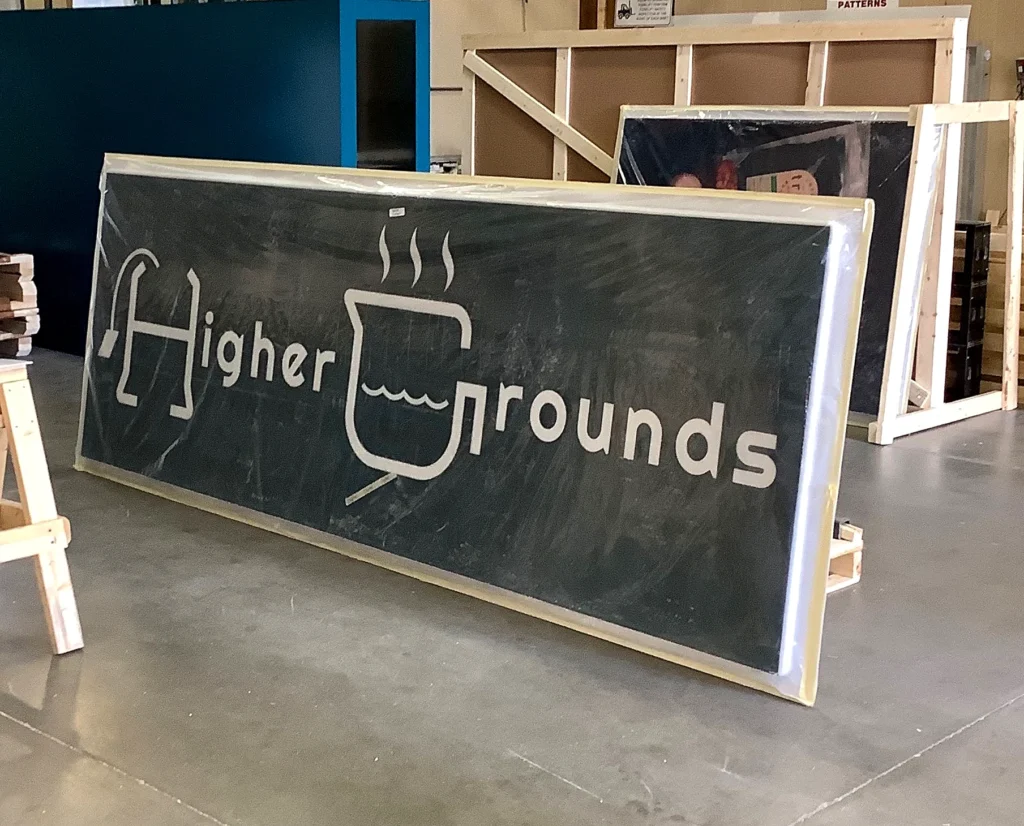
Plan for viewing distance
Character height, pixel pitch, sign placement, traffic speed, and the time available to read a message all affect the display recommendation.
Sign system / 01
Change the message. Keep the attention.
Programmable displays give independent businesses a visible way to share changing offers, announcements, and updates.
The short answer
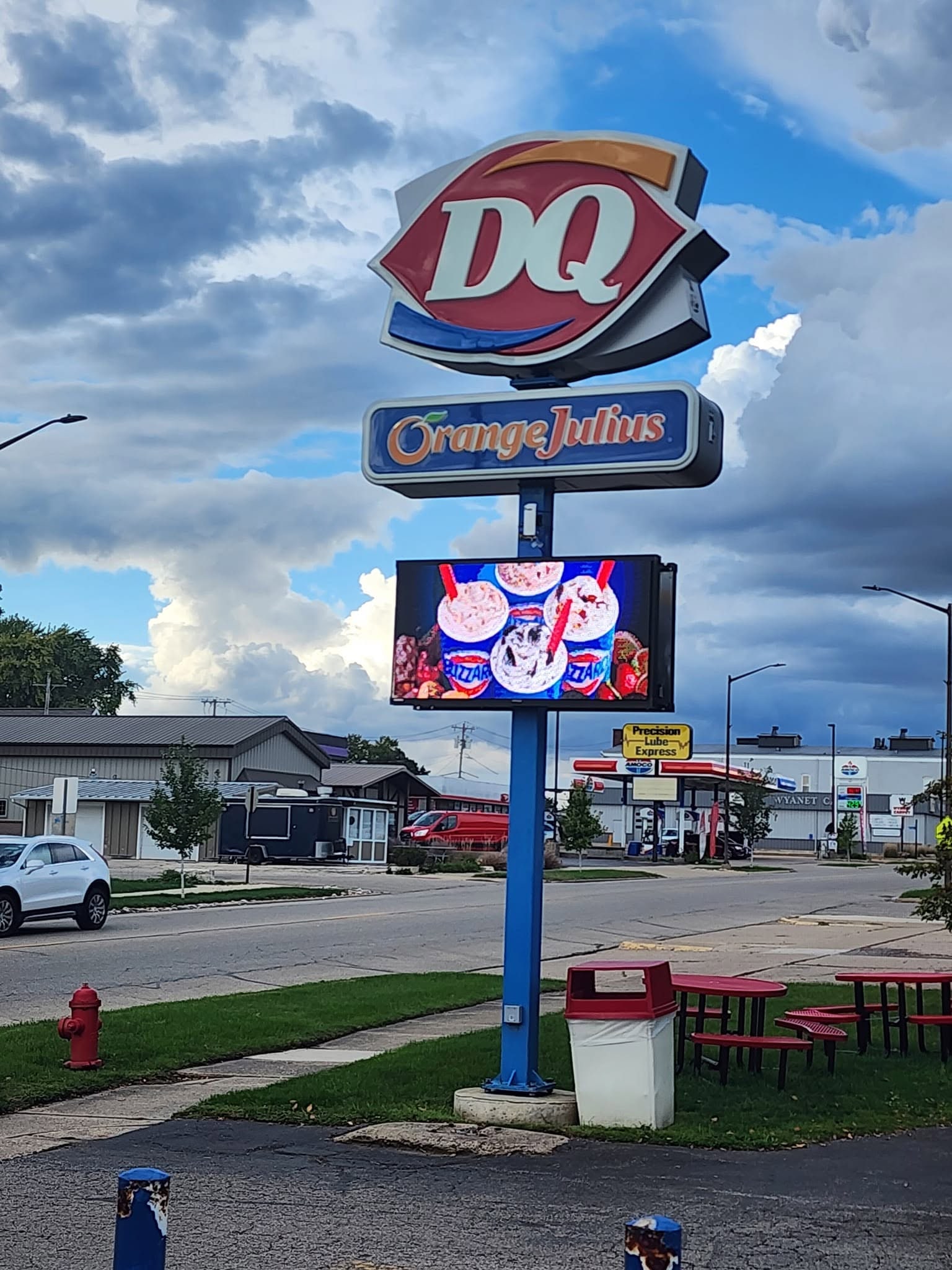
An outdoor LED sign, or electronic message center, is a programmable display that shows changing text, graphics and, where allowed, video. Choose pixel pitch by viewing distance, size by road speed, and confirm local hold-time and brightness rules first. National cost guides put outdoor LED signs from $750 to $30,000.
Best fit
Planning factors
Every recommendation is shaped around the site, the audience, the business identity, and the practical path to installation.
Character height, pixel pitch, sign placement, traffic speed, and the time available to read a message all affect the display recommendation.
The most effective message centers pair a permanent business identity with a changeable area for timely offers, events, and updates.
Power, structure, permitting, access, and installation conditions are reviewed before the display moves into production.
Every digital sign order includes on-site training for the software, communication setup, scheduling, and the practical tools your team will use to keep the display current.
Need help with the location, permits, or installer coordination? See site survey and installation support
Buyer’s guide
Straight answers to the questions buyers ask most, with the sources behind every figure.
Pixel pitch is the distance in millimeters between the centers of neighboring pixels. The finer the pitch, the closer people can view the display before they see individual dots, and the more it costs, because pixel density rises. Choose pitch from your closest regular viewers, not the farthest.
A display beside a drive-through lane or sidewalk needs a finer pitch than one on a pylon 60 feet back from a highway.
AVIXA, the audiovisual industry association, gives a visual acuity distance formula: pitch times 3,438 is the distance at which a viewer with 20/20 vision no longer sees individual pixels. That is a strict smooth-image test. Closer viewers can still read large text; photos and fine graphics are what suffer. Pitch also sets text size: a character seven pixels tall is seven times the pitch. Look at a sample at the real distance before you choose.
| Pixel pitch | Distance where a 20/20 viewer stops seeing individual pixels | Height of a 7-pixel-tall character | Pixels across a 10-foot-wide display |
|---|---|---|---|
| 4 mm | About 45 ft | About 1.1 in | About 762 |
| 6 mm | About 68 ft | About 1.7 in | About 508 |
| 8 mm | About 90 ft | About 2.2 in | About 381 |
| 10 mm | About 113 ft | About 2.8 in | About 305 |
| 16 mm | About 180 ft | About 4.4 in | About 190 |
| 19 mm | About 214 ft | About 5.2 in | About 160 |
Bright enough to read in direct sun, then dimmed hard at night. USSC Foundation guidance notes message centers may approach 10,000 nits in daylight and should drop to 300 to 700 nits at night. The International Sign Association recommends no more than 0.3 footcandles above ambient light at night.
A nit is one candela per square meter, a measure of luminance. ISA notes that most message centers are built bright enough for daylight legibility, and that daytime settings are usually wrong for night viewing. USSC recommends a nighttime maximum of 700 nits for all signs.
Dimming is what keeps a sign legal and neighborly. Displays use a photocell, a schedule or both, and USSC guidance says message centers must be dimmed at night to only 2 to 8 percent of daytime brightness. More than 200 localities have adopted the footcandle method ISA recommends.
Sources: USSC Foundation - On-Premise Sign Standards: Sign Lighting (Feb. 2018); International Sign Association - EMC Brightness Level Recommendations; International Sign Association - Night-time Brightness Level Recommendations for On-Premise Electronic Message Centers (updated August 2016)
Full-color displays can show logos, photos and graphics in brand colors; monochrome shows text in one color. Monochrome can carry plain text. Suntronix's message centers are full-color, so the display can carry the same colors, logos and photos as your permanent sign and your other advertising.
Full color matters most when the message depends on an image: food, vehicles, products, event graphics. It also lets the display match the colors of the permanent sign above it. Whatever the display, test content at its actual resolution; a detailed image can turn to noise at a coarse pitch.
Double-sided when traffic approaches from both directions and the sign stands perpendicular to the road. Single-sided when the sign faces one approach or mounts on a wall. Count real traffic on each approach before paying for a second face; a side road with little traffic may not need one.
Two faces roughly double the display hardware, so check whether the second approach carries real traffic. A V-shaped layout can serve two approaches on a corner.
Content is created and scheduled in software and sent to the sign over a wired, wireless or cellular link. Common links are a cable from the building, a wireless bridge or a cellular modem. The harder question is who will keep the schedule current every week.
Pick the connection by site: a sign far from the building may need radio or cellular, while one close by can take a cable. Ask who pays for any cellular or software subscription and what happens to scheduled content if the connection drops.
Every Suntronix digital sign order includes on-site training for the software, communication setup and scheduling. Train two people so the sign does not go stale when one leaves.
LEDs rarely fail outright; they dim. The U.S. Department of Energy notes that LED life is usually rated at L70, the point when light output has dropped to 70 percent of the original. Ask for the L70 rating of the display's LEDs, and plan for service on power supplies, controllers and modules.
DOE also points out that any part of an LED system can fail, including electronics, thermal management, connectors and seals, and that color shift can matter more than dimming in some uses. On a full-color sign, uneven aging shows up as off-white whites. Ask what LED components are used and how they are tested.
Suntronix provides maintenance and repair support for products it sells; travel, parts, labor and warranty coverage depend on the project terms.
Sources: U.S. Department of Energy - Lifetime and Reliability, Solid-State Lighting Technology Fact Sheet
Expect your code to set a minimum time each message must stay up, a night brightness cap and a dimming requirement; some also limit display size, hours or zones. The numbers vary widely: minimum hold times range from 2 seconds in Spokane, Washington to 15 seconds for multi-business signs in Clemson, South Carolina.
Size limits are common too. Spokane caps message centers in several zones at half the allowed sign area or 48 square feet, whichever is less, and limits any video portion of a sign to segments of two to five seconds. Treat the table as examples. Call your planning office with the address before you design content or size the display.
| Source | Minimum message hold | Night brightness | Other limits |
|---|---|---|---|
| Spokane, WA (SMC 17C.240.247) | 2 seconds for static images | No more than 0.3 fc over ambient; automatic dimming photocell | Off 10 pm to 6 am for institutional uses in residential zones; banned downtown |
| Clemson, SC (multi-business signs) | 15 seconds | No more than 0.3 fc over ambient; photocell dimmer | No scrolling or animation; 100 ft from residential property; default to stop or off on malfunction |
| Panguitch, UT | 8 seconds | No more than 0.3 fc over ambient | No animation or scrolling; automatic dimming |
| USSC model code (not law) | 12 s residential, 8 s office zones | Automatic dimming required | Commercial zones: all effects except flashing; full-motion video by special exception |
Sources: City of Spokane, WA - Municipal Code 17C.240.247, Electronic Message Center Signs (one city's example); City of Clemson, SC - Code of Ordinances, sign standards (online page 505; one city's example); Panguitch City, UT - Signage Permit and sign requirements (one city's example); USSC Foundation - Model On-Premise Sign Code (a model, not law)
National guides put outdoor LED and digital signs at $750 to $30,000, and typical electronic message signs at $5,000 to $10,000 or more. Display size, pixel pitch, one or two faces, the structure and electrical work drive the price. These are third-party estimates, not Suntronix pricing.
| Item | Published range | Source |
|---|---|---|
| Outdoor LED and digital signs | $750 to $30,000 | HomeAdvisor |
| Digital / electronic message signs | $5,000 to $10,000+ | HomeGuide |
| Electrical wiring | $560 to $2,300 | HomeAdvisor |
| Building permit | $400 to $2,500 | HomeAdvisor |
Sources: AVIXA (Audiovisual and Integrated Experience Association) Xchange - What is Pixel Pitch? How to Calculate Pixel Pitch; HomeAdvisor - How Much Does Commercial Sign Installation Cost? (updated June 20, 2026); HomeGuide - How Much Does a Business Sign Cost? (Dec. 19, 2023)
Before the first conversation
A few real details from the site make it easier to compare the right sign directions and define a practical next step.
List the information that changes, how often it changes, and who will keep it current.
Capture the road or walk-up view where customers first need to notice the sign.
Share the address, available sign area, target timing, power information, and any property criteria you already have.
If you do not have every detail yet, start with the address, a few photographs, and the visibility problem you want the sign to solve.
Weighing the investment? See what a sign needs to earn in the ROI calculator
Field proof
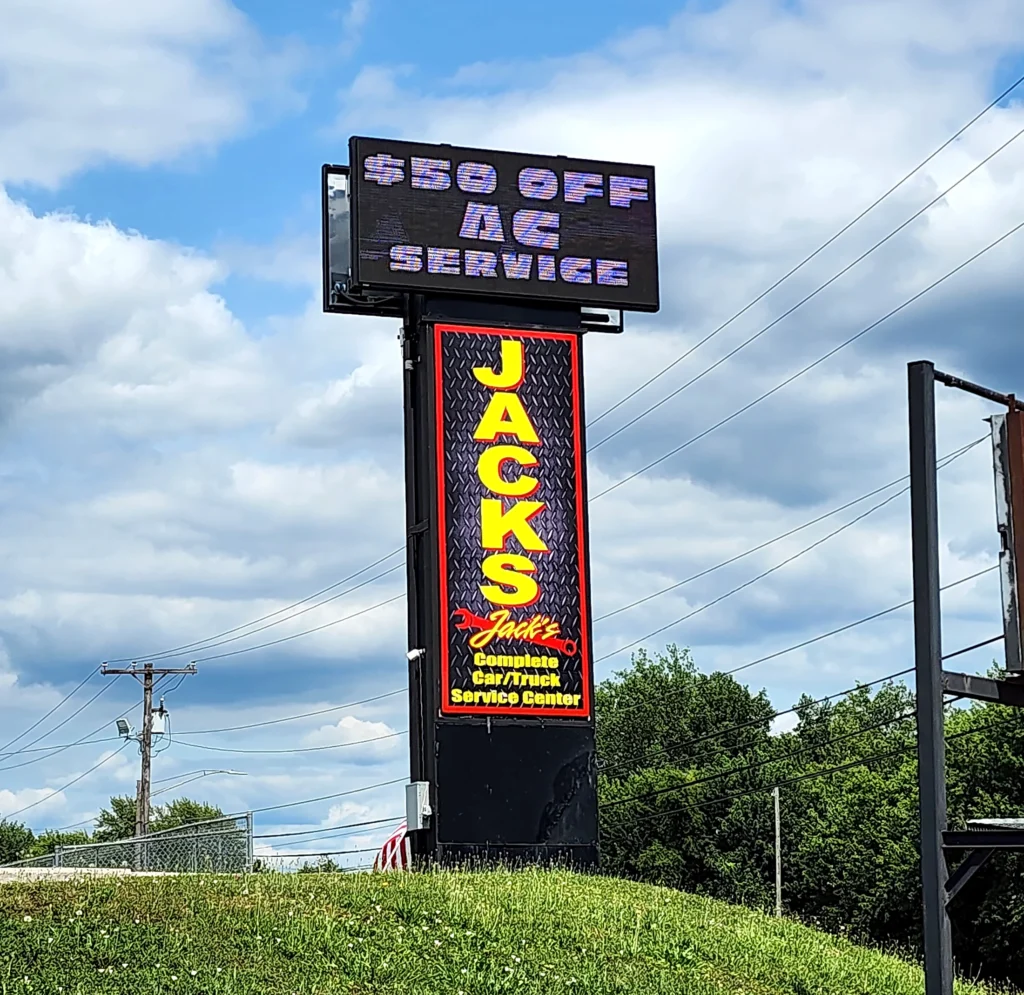
Real Suntronix work connects the planning decisions to the sign customers see in the field.

Digital & LED Displays
Digital & LED Displays
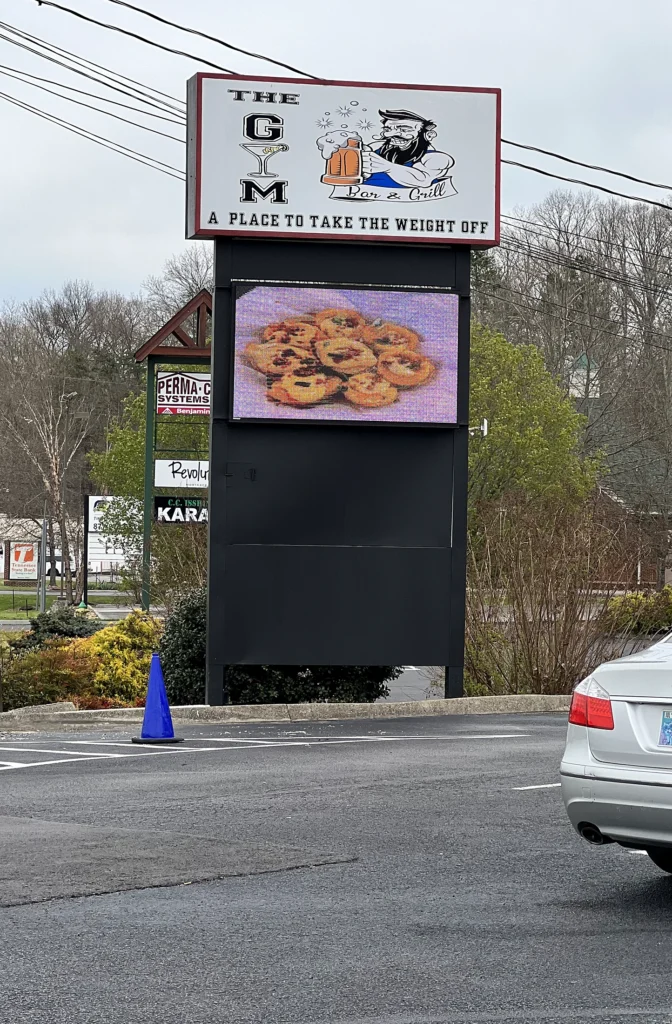
Digital & LED Displays
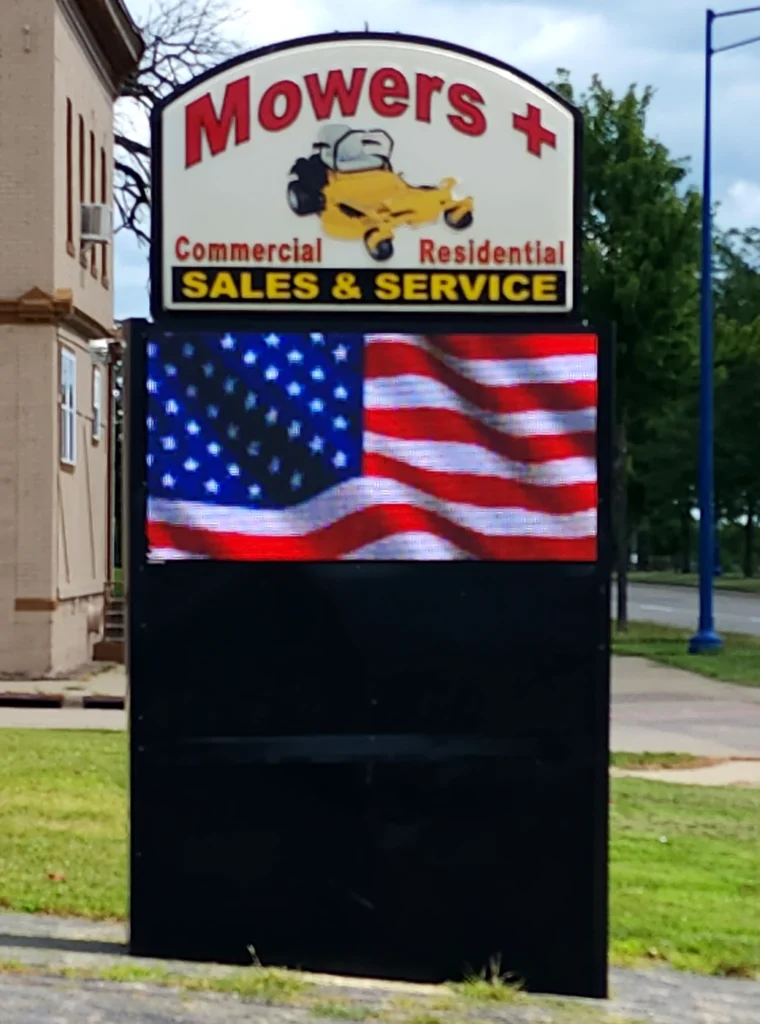
Digital & LED Displays

Digital & LED Displays
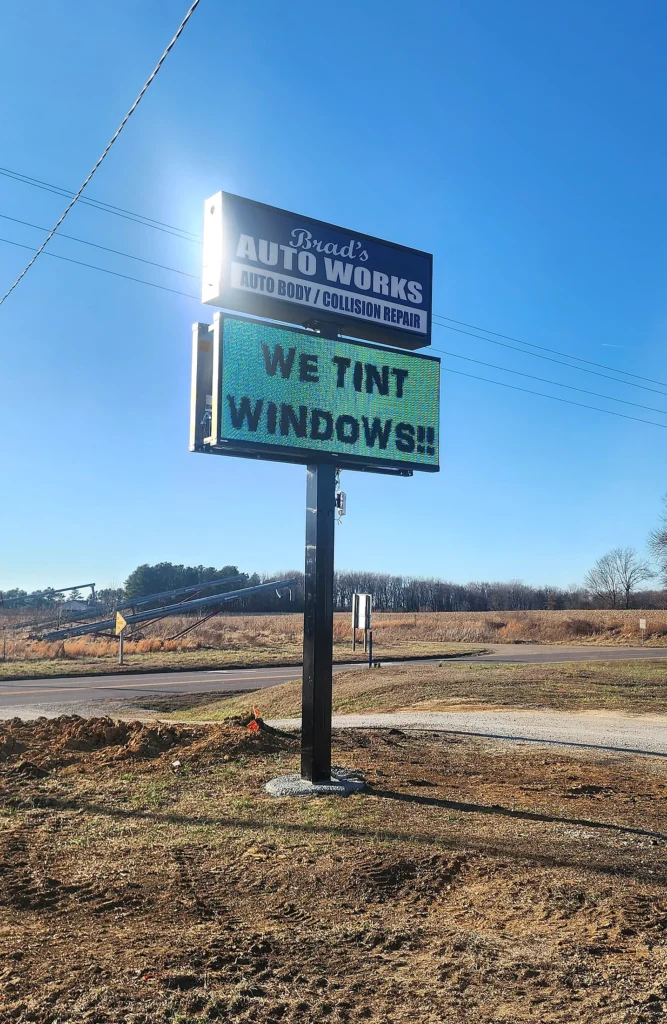
Digital & LED Displays
Field footage
Real customer displays, recorded on site. Play a silent clip to see the messages change.
Quick answers
Suntronix offers indoor digital window signs and outdoor LED message centers. The right format depends on the location, viewing distance, and what you need to communicate.
Share the project address, an approximate size or available sign area, your timeline, and photos of the location when possible.
Pixel pitch is the center-to-center distance between neighboring pixels, in millimeters. Smaller pitch means higher resolution, a closer acceptable viewing distance and a higher price. AVIXA's visual acuity formula, pitch x 3,438, gives the distance at which a 20/20 viewer stops seeing individual pixels.
It depends on character height, not just pitch. A character seven pixels tall on a 10 mm display is about 2.8 inches (7 x 10 mm). For text, USSC rules of thumb allow about 30 feet of reading distance per inch of capital letter height, so use taller characters for road viewing.
LEDs rarely fail outright; they dim over time. DOE notes LED life is usually rated at L70, when output falls to 70 percent of the original. Ask for the L70 rating of the display's LEDs. Power supplies, controllers and modules may need service along the way.
Technically yes; legally it depends on your code. Spokane limits video segments to between two and five seconds, and the USSC model code allows full-motion video in commercial zones only by special exception. Check before you plan video content.
Almost always. Expect a sign permit and an electrical permit, and engineering if you add a structure. Many cities also ask you to certify brightness limits; Spokane requires a signed letter with the permit application.
Often. The existing structure has to carry the added weight and wind area, power has to reach the display, and the code has to allow a message center at your address. Some cities treat older signs as nonconforming, which can limit changes.
Some codes require a fail-safe. Clemson, South Carolina, for example, requires a default mechanism that stops the sign in one position or turns it off if it malfunctions. Ask how the display behaves on a fault and who gets notified.
Suntronix reviews the location, visibility needs, timing, and business goals before shaping a concept and quote.
Yes. The quote form accepts a JPG, PNG, or PDF up to 5 MB so the team can understand the project sooner.
Related field notes
Use these short guides alongside the site details so the next conversation has a clearer starting point.
Decide whether the site needs a permanent identity, a changing message, or both.
Read the field noteUse the customer approach and available reading time to guide content and scale.
Read the field noteFigures on this page come from the publishers below. They are general, third-party references rather than Suntronix pricing or specifications, and your site, local code and product choice will change them.
The next landmark could be yours
Tell us what needs attention. We’ll help engineer the sign that earns it.