In this guide
Choose a static business sign when your main job is consistent identification: the name customers need to recognize and the place they need to find. Consider a digital LED sign when the information genuinely changes, such as specials, events or scheduled activities. Some properties benefit from both, with a permanent identity above or beside a changeable display.
The decision starts with the message and the customer’s approach. A digital screen does not automatically solve a poorly placed sign, and a static sign does not need to be visually plain.
“Static” does not mean unlighted
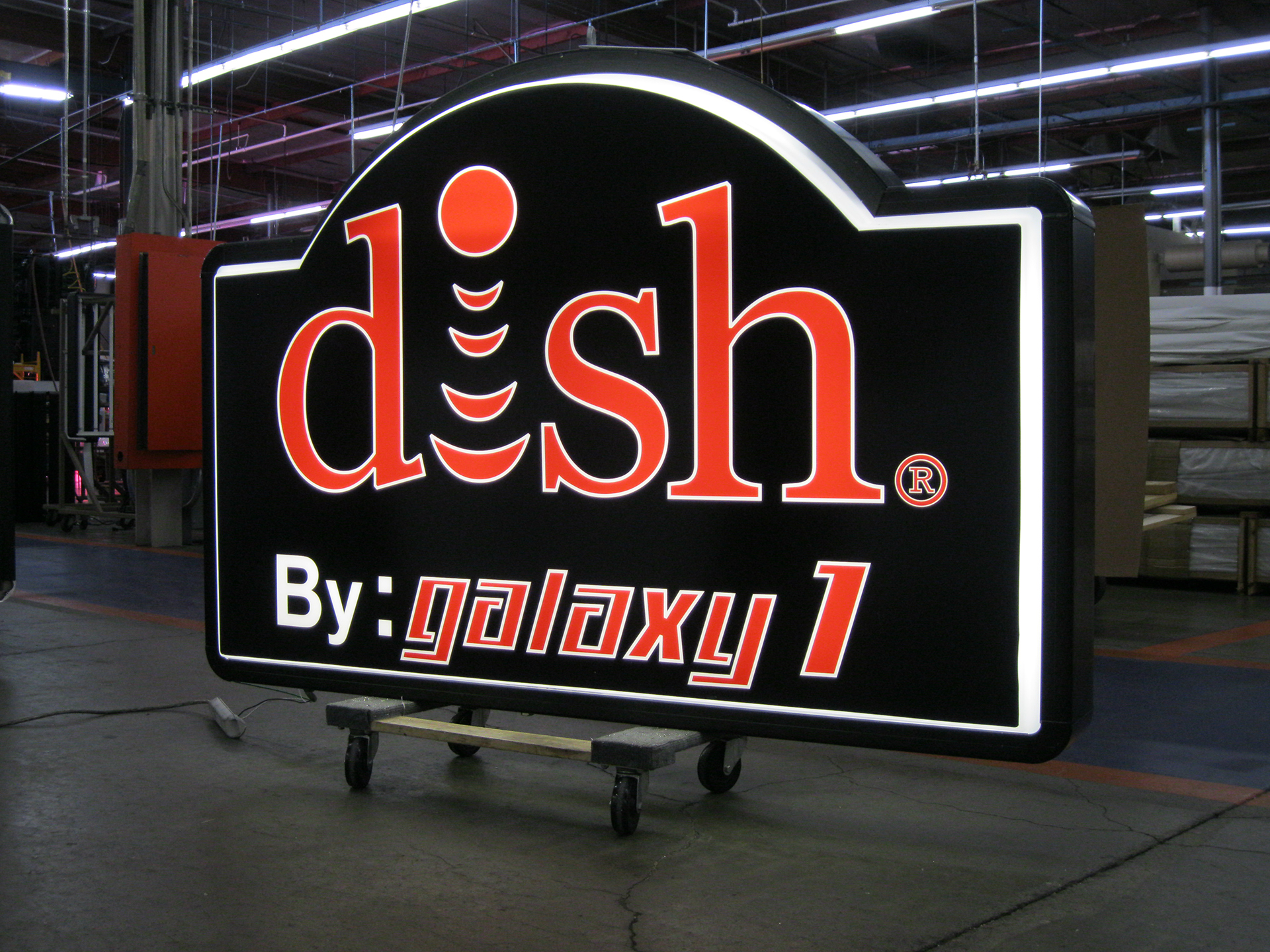
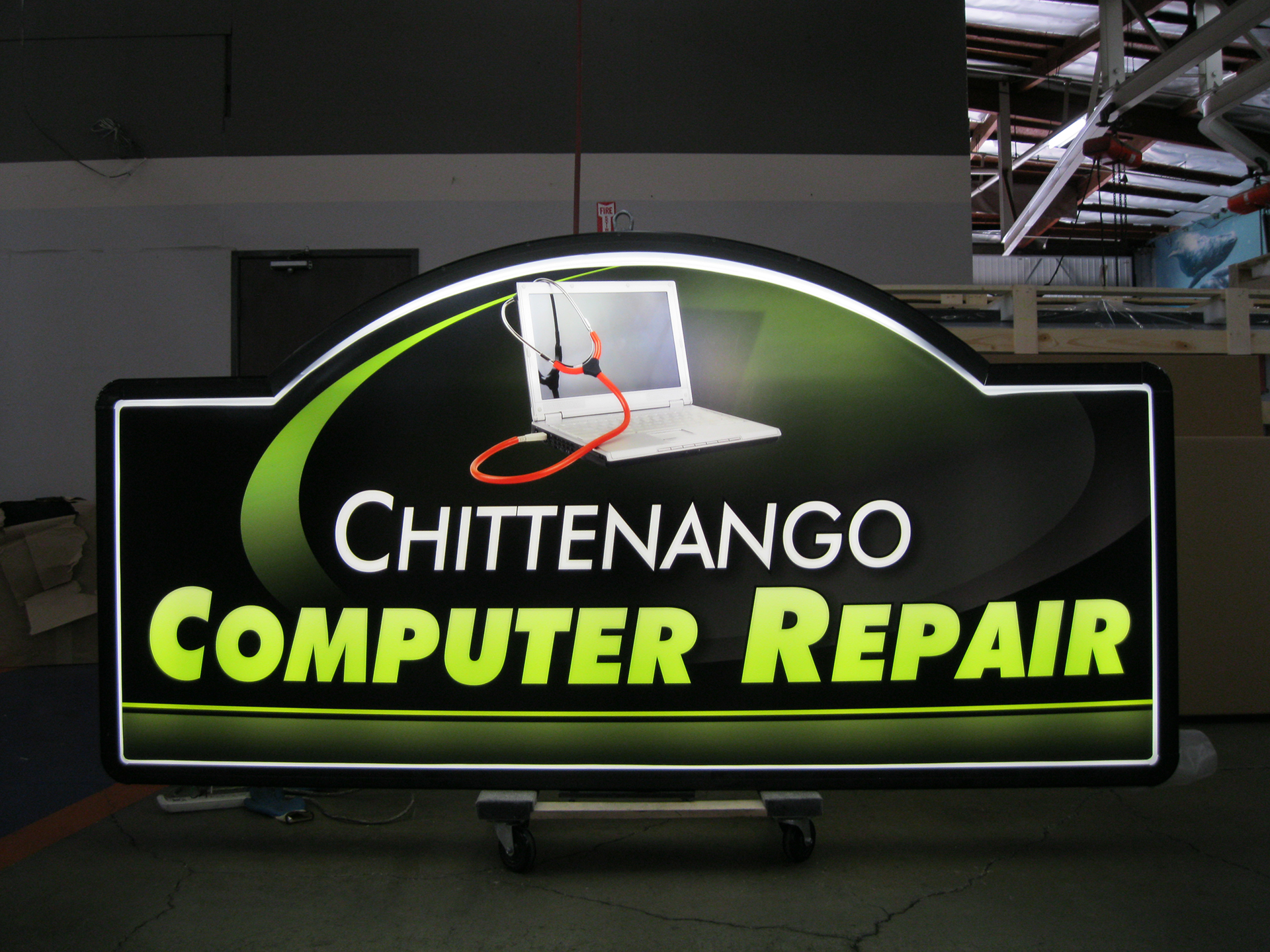
A static sign displays a fixed message. It can still be illuminated, dimensional or custom fabricated. Channel letters, lighted cabinets and many monument signs are examples. Their job is to present the business identity consistently during the conditions in which customers need to see it.
A digital message center changes its content electronically. It can show different information through the day, but it also needs someone to manage that information. The choice is partly an equipment decision and partly an operating decision.
| Question | Static identification | Digital LED display |
|---|---|---|
| What is the main message? | The business name, logo or lasting destination. | Information that needs to change. |
| How is content updated? | A physical change to graphics, faces or letters. | Through the display’s content-control system. |
| Who operates it? | No routine content scheduling. | A person responsible for content and schedules. |
| What needs checking? | Readability, materials, lighting, mounting and site conditions. | Those site conditions plus display specifications, connectivity and content operation. |
Use the messages you actually need to publish
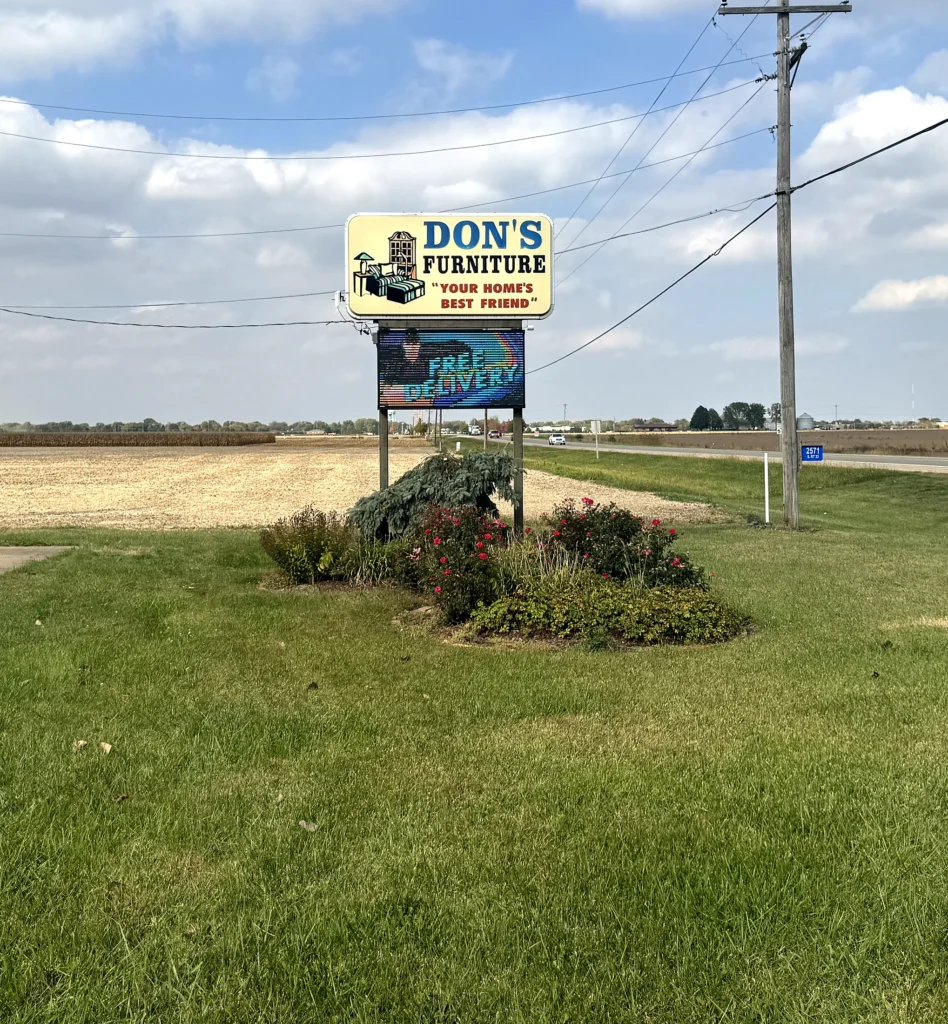
Write down the messages you expect to use during an ordinary month. For a restaurant, that might include a lunch special, a seasonal item and a holiday closure. For a furniture store, it might be a delivery promotion or a specific department offer. These are planning examples, not promises that any particular message will generate sales.
If the list consists almost entirely of your name and core service, static identification may cover the job. If the list changes frequently and matters to people passing the site, a digital display deserves a closer look.
Next, identify who will create and approve updates. An electronic sign can keep showing an expired offer until someone changes the schedule. Agree on an owner for the content, an update routine and a way to remove outdated messages.
Check the viewing conditions before the screen specification
A display intended for close viewing has a different job from one beside a busy road. Consider the first clear sight line, viewing angle and time available to read. Physical screen size and pixel pitch should be evaluated together with a representative message, rather than as isolated numbers on a quote.
Ask to see content at the intended display proportions. A detailed graphic designed for a social-media post may become unreadable when translated to the sign’s pixel dimensions. Digital-display manufacturer Daktronics recommends simple layouts and strong text/background contrast in its LED content design guidance.
For a useful first test, build one frame around one message. Make the offer or event clear, then decide whether a second line is necessary. Do not force a reader to follow several frames in order to understand what the business is saying.
When a combined sign makes sense
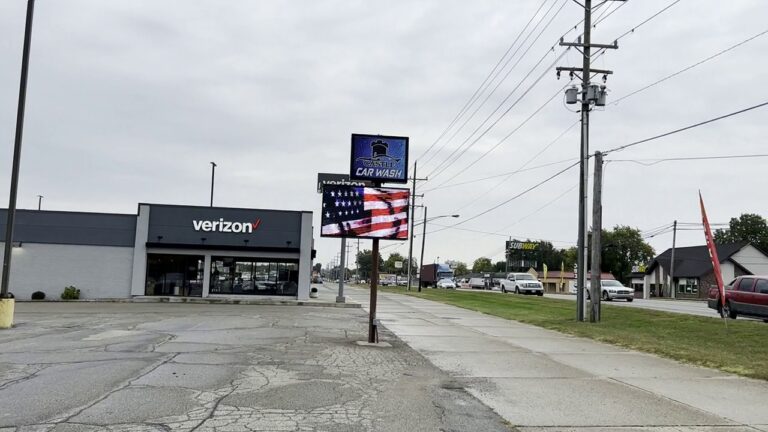
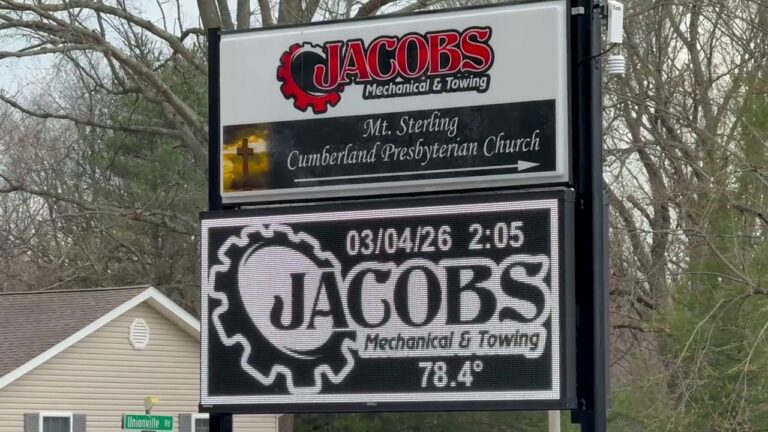
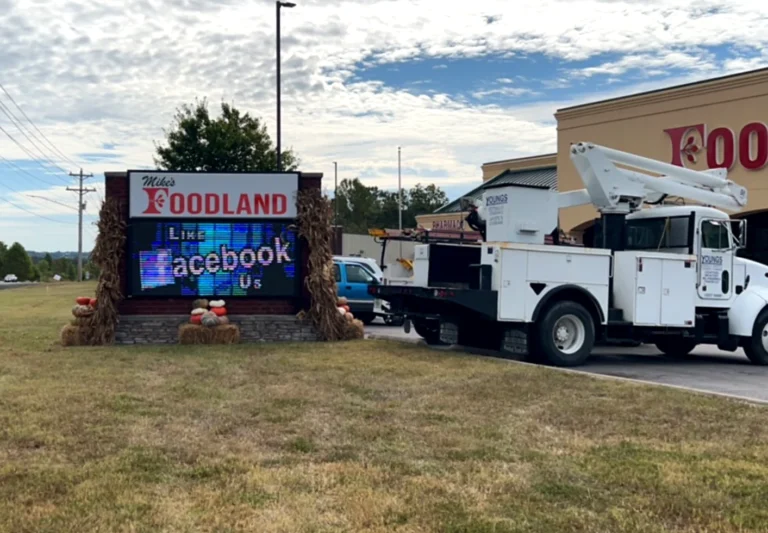
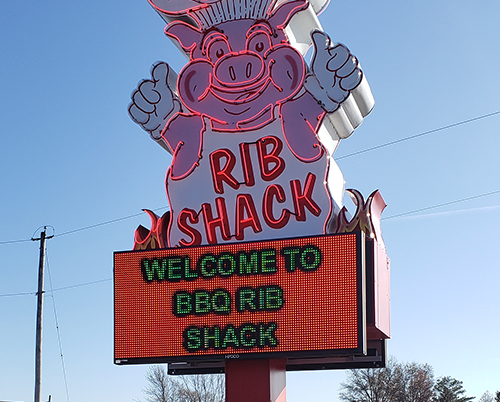
A permanent name panel and a digital message area can divide the work cleanly. Customers can identify the business even while the screen displays a current offer. The two elements still need to be designed as one composition so that neither becomes an afterthought.
Review completed Suntronix projects to compare the relationship between identification, display size and the surrounding property. A photograph is a starting point for discussing proportion; it does not establish what will fit or be approved at another site.
Questions to settle before ordering
- Is the proposed sign format permitted at this property? Ask the relevant local authority and property owner what requirements apply.
- What electrical supply, support and access will the installed system need?
- How will the controller communicate with the display?
- Which software, access, subscriptions or ongoing services are included in the proposal?
- Who receives training, and what happens if that employee leaves?
- How are service requests handled, and which warranty terms apply?
For digital signs, ask specifically about the local requirements affecting brightness, message changes and operating hours before approving a content plan. Requirements vary by location; do not copy the operating behavior of another business’s sign as proof of what is allowed.
A simple decision process
- Define the permanent message. What must someone recognize every day?
- List the changing messages. What needs updating, and how often?
- Review the site. Can people see and read the proposed sign during their approach?
- Assign ownership. Who handles content, training and service coordination?
- Compare the complete scope. Include the sign, supporting work and ongoing responsibilities.
If both formats could work, use the business sign quote checklist to compare proposals. Suntronix can help connect your message and site details with the appropriate digital LED display or permanent sign system.